SUNY OHEP Sizzle Reel
A film from the SUNY Office of Higher Education in Prison.
Watch on YouTube ↗From upskilling myself to designing workforce systems.
My relationship with workforce development started personally. I used education, professional certifications, sales skills, and technology training to reposition myself and move deeper into the startup economy. Eventually, I went from seeking access to opportunity to helping design systems that create it for other people.
Through participation in Columbia University’s Justice in Education Initiative, I treated structured learning as a way to change my professional direction. I pursued practical skills and credentials across sales engineering, business development, Salesforce, HubSpot, technology commercialization, professional sales, and go-to-market strategy.
The point was never a prestigious line on a biography. It was the ability to show up differently in the market—to understand the tools, language, and expectations of the technology sector.
I began to see workforce development as a sequence of access, identity, experience, and movement—not simply training people for jobs.
Those growing sales, business-development, and technology capabilities helped me move further into startup work. At Liven, a Series A technology company, I contributed to U.S. go-to-market business development.
The experience offered a close view of how startups recruit, sell, grow, build markets, and compete for talent. It reinforced a simple idea: workforce development is most powerful when skills meet real market demand.
Franklin Skills / Workforce innovation + tech talent management
I later served as a Managing Director at Franklin Skills, a workforce innovation and technology talent-management firm. The work connected technology talent, employer demand, career pathways, skills development, and economic mobility. Its August 2024 overview reported serving more than 100 employers, including 35 Fortune 500 and enterprise companies, across 13 countries.
My perspective expanded from one person’s career transition to the infrastructure connecting employers, talent, education, technology, and economic development. The question became how to make opportunity more legible and reachable across a whole system.


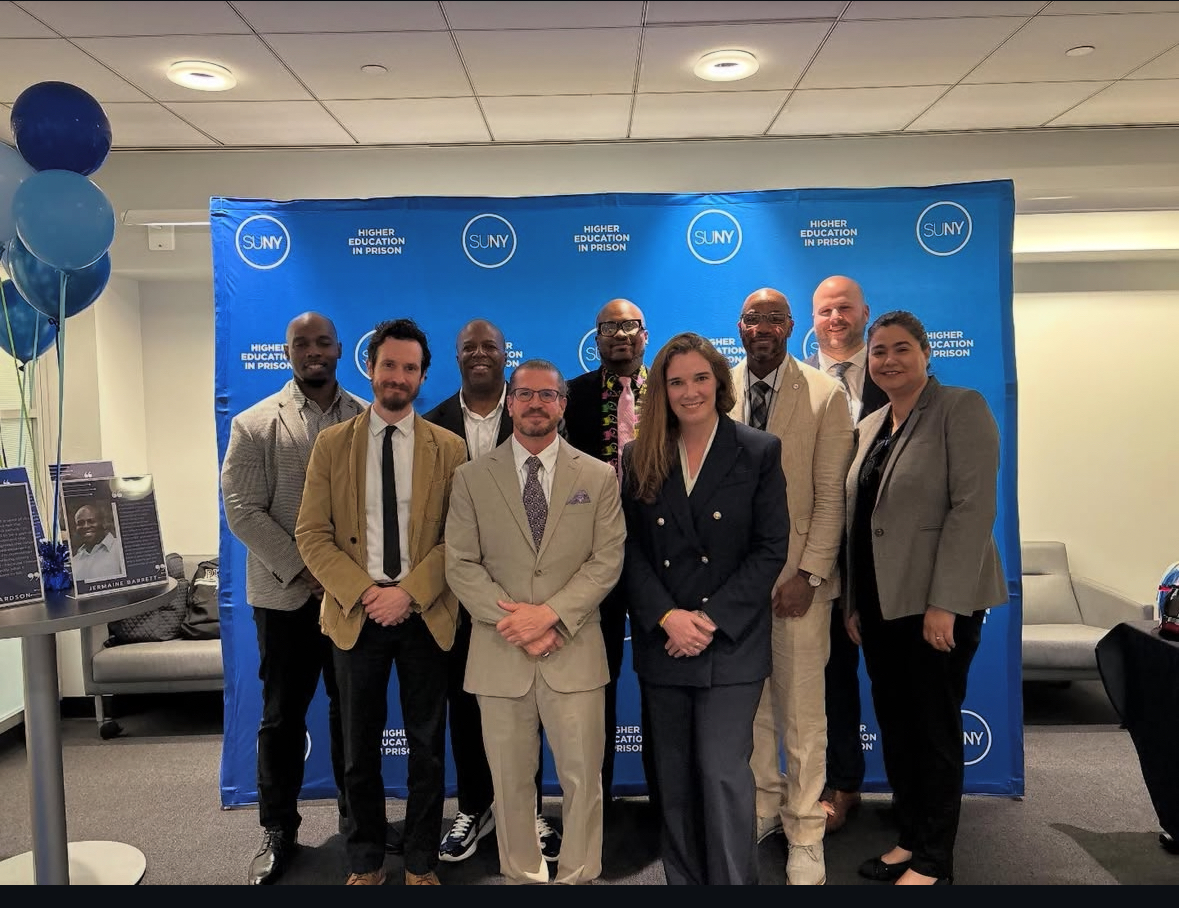
As an Educational Justice Fellow with the SUNY Office of Higher Education in Prison, I focused on the transition between education, reentry, professional experience, employment, and economic mobility.
My fellowship project, the Workforce Reintegration Network (WRN), proposed structured employment pathways for justice-impacted people. Within that design, I developed a reentry internship and workforce-development model connecting SUNY students with professional experience and employers. These were project designs and proposed next steps, not a claim of implementation at statewide scale.
Education can change what a person knows. But after reentry, people may still confront gaps in professional experience, employer networks, references, technology access, industry exposure, career pathways, and the weight of stigma. The design goal was a bridge to meaningful professional opportunity.

The WRN model was designed to build employability and the less visible assets of a career: professional identity, references, networks, practical experience, and room to advance. Dante’s fellowship presentation proposed technology-supported coordination with employers and SUNY reentry and workforce partners.
The aim was to connect students with employers, institutions, mentors, workforce organizations, and meaningful professional opportunities.


Learner / Career changer / Startup operator / Business-development professional / Workforce executive / Fellow / Program designer / Systems thinker
The next generation of workforce development cannot only prepare people for jobs that exist today.
People will work alongside AI agents, automation, intelligent software, data systems, agentic workflows, AI-native companies, and business models that keep changing. The challenge is to expand human capability and access while the tools move quickly.
That means investing in AI literacy, problem solving, communication, sales, systems thinking, workflow design, collaboration with AI agents, continuous learning, creativity, and entrepreneurial capability.
My current work in learning design, agentic business systems, super agencies, and super organizations asks what a more inclusive future of work could be built to enable.
How do we give people the capabilities and infrastructure required to participate in the next economy?
A SUNY Office of Higher Education in Prison film adds institutional context to Dante’s Educational Justice Fellowship and reentry workforce design.
A film from the SUNY Office of Higher Education in Prison.
Watch on YouTube ↗I used workforce development to change my own economic trajectory.
Then I started designing workforce systems for other people.
Now I’m studying what workforce development looks like when humans work alongside artificial intelligence.